Starting a business in the United States often involves choosing the right legal structure. One of the most popular options for entrepreneurs is a Limited Liability Company (LLC). An LLC offers flexibility, legal protection, and tax advantages, making it an attractive choice for small business owners and startups.
Registering an LLC is a straightforward process, but it requires following specific legal steps depending on the state where the business is formed. Understanding these steps can help entrepreneurs establish their businesses legally and efficiently.
What Is an LLC
A Limited Liability Company (LLC) is a business structure that combines features of both corporations and sole proprietorships. It provides personal liability protection for the business owner while maintaining flexible tax options.
In an LLC, the owners are called members. Members are generally not personally responsible for business debts or legal liabilities, which helps protect personal assets such as homes and savings.
LLCs are widely used by freelancers, small businesses, startups, and online entrepreneurs due to their simple structure and reduced administrative requirements.
Benefits of Forming an LLC
One of the main advantages of forming an LLC is limited liability protection. This means that if the business faces legal claims or debts, the personal assets of the owners are typically protected.
Another benefit is tax flexibility. LLCs can choose how they want to be taxed. Many LLCs are taxed as pass-through entities, meaning the business income is reported on the owners’ personal tax returns instead of being taxed separately.
LLCs also require fewer formalities compared to corporations. There are typically fewer paperwork requirements and less complex management structures.
Step 1: Choose a Business Name
The first step in registering an LLC is selecting a unique business name. The name must comply with the rules of the state where the LLC is being registered.
Most states require the business name to include “Limited Liability Company” or an abbreviation such as “LLC” or “L.L.C.”
Before finalizing the name, entrepreneurs should check the state’s business name database to ensure the name is not already in use by another company.
Step 2: Select the State for Registration
Businesses must choose the state where the LLC will be registered. Most entrepreneurs register their LLC in the state where they operate their business.
Some businesses choose states such as Delaware, Wyoming, or Nevada because of their business-friendly regulations and tax advantages.
However, if a business operates in a different state than the one where it is registered, additional registration as a foreign LLC may be required.
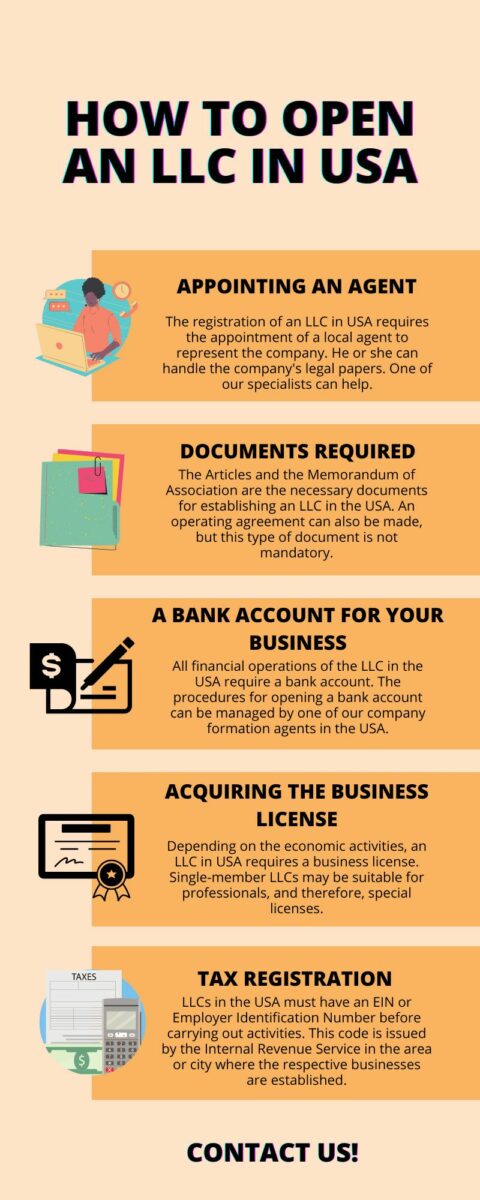
Step 3: Appoint a Registered Agent
A registered agent is a person or company responsible for receiving legal documents and official government notices on behalf of the LLC.
The registered agent must have a physical address in the state where the LLC is registered.
Many businesses choose professional registered agent services to ensure important legal documents are received and handled properly.
Step 4: File Articles of Organization
The Articles of Organization is the official document used to create an LLC. This document is filed with the state’s business registration office, often the Secretary of State.
The document typically includes basic information such as the business name, registered agent details, business address, and the names of the LLC members.
Once the Articles of Organization are approved and the filing fee is paid, the LLC is officially recognized as a legal business entity.
Step 5: Create an Operating Agreement
An operating agreement is an internal document that outlines how the LLC will be managed. Although not always required by law, it is highly recommended for all LLCs.
The operating agreement defines member responsibilities, profit distribution, decision-making processes, and procedures for adding or removing members.
Having an operating agreement helps prevent misunderstandings among members and provides clear guidelines for business operations.
Step 6: Obtain an EIN
An Employer Identification Number (EIN) is issued by the Internal Revenue Service (IRS). This number functions similarly to a social security number for businesses.
An EIN is required for opening business bank accounts, hiring employees, and filing certain tax documents.
Business owners can apply for an EIN through the IRS website, and the process is usually free.
Step 7: Open a Business Bank Account
Separating personal finances from business finances is essential for maintaining legal protection and proper accounting practices.
Opening a business bank account allows the LLC to manage income, expenses, and taxes separately from the owner’s personal accounts.
Many banks require the LLC formation documents and EIN before opening a business account.
Step 8: Obtain Business Licenses and Permits
Depending on the type of business and its location, additional licenses or permits may be required. These licenses may include local business permits, industry-specific licenses, or sales tax permits.
Entrepreneurs should research state and local requirements to ensure full legal compliance.
Maintaining an LLC
After forming an LLC, business owners must maintain compliance with state regulations. This may include filing annual reports, renewing licenses, and paying state fees.
Maintaining accurate financial records and following legal requirements helps ensure that the LLC continues operating legally.
Registering an LLC in the United States is a valuable step for entrepreneurs who want legal protection and flexible business management. By choosing a business name, filing the Articles of Organization, obtaining an EIN, and maintaining compliance with state regulations, entrepreneurs can establish a solid legal foundation for their businesses. With proper planning and organization, forming an LLC can provide long-term benefits for business growth and financial security.