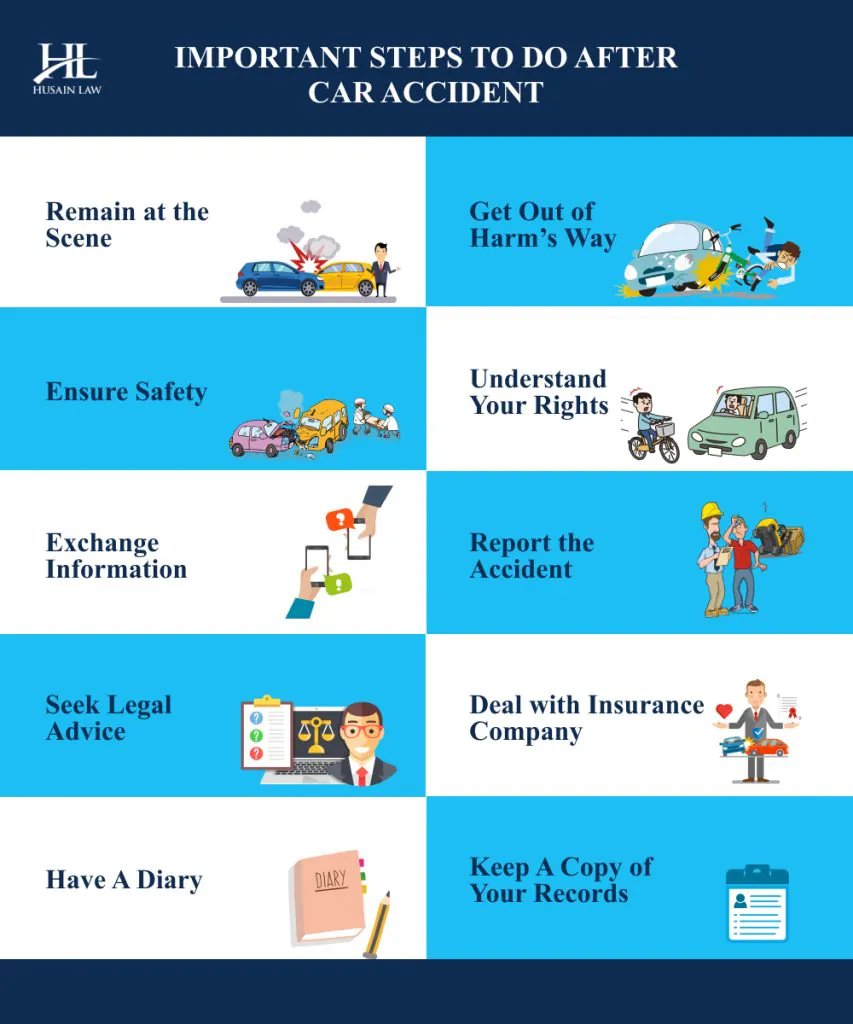
Car accidents can happen unexpectedly and often leave victims feeling overwhelmed and unsure about what to do next. Knowing the correct steps to take after an accident can protect your safety, preserve important evidence, and strengthen any potential legal claim. Acting quickly and responsibly can also help ensure that insurance companies and legal authorities have accurate information about the incident.
Understanding the legal process after a car accident can help victims recover compensation for damages, medical expenses, and lost income.
Ensure Safety and Check for Injuries
The first priority after any car accident is safety. Drivers and passengers should check themselves and others for injuries. If anyone is injured, emergency medical services should be contacted immediately.
If the vehicles involved are causing traffic hazards and it is safe to do so, move them to the side of the road. Turning on hazard lights can also alert other drivers and prevent further accidents.
Even if injuries appear minor, it is still important to seek medical attention because some injuries may not be immediately noticeable.
Call Law Enforcement
In many situations, contacting law enforcement is required after a car accident. Police officers will document the accident, collect statements from drivers and witnesses, and create an official accident report.
The police report becomes an important piece of evidence when dealing with insurance claims or legal disputes. It provides an objective account of the incident and helps establish liability.
Drivers should cooperate with officers and provide accurate information about the accident.
Exchange Information With Other Drivers
After ensuring safety and contacting authorities, drivers should exchange essential information with all parties involved in the accident.
Important information includes driver names, contact details, driver’s license numbers, vehicle registration details, and insurance policy information.
It is also helpful to record the make, model, and license plate number of the other vehicles involved in the accident.
This information will be necessary when filing insurance claims or pursuing legal action.
Gather Evidence at the Scene
Collecting evidence at the accident scene can significantly strengthen a legal claim. If it is safe to do so, take photographs of vehicle damage, road conditions, traffic signs, skid marks, and any visible injuries.
Photographs and videos provide valuable documentation that can help determine how the accident occurred.
Witness statements are also important. If there are bystanders who saw the accident, ask for their contact information so they can provide testimony if necessary.
Seek Medical Attention
Even if injuries seem minor, visiting a medical professional after an accident is highly recommended. Some injuries, such as whiplash or internal trauma, may not appear immediately.
Medical records also serve as important evidence when filing insurance claims or personal injury lawsuits.
Delaying medical treatment may weaken a legal case because insurance companies could argue that the injuries were not serious or were unrelated to the accident.
Notify Your Insurance Company
After a car accident, it is important to notify your insurance company as soon as possible. Most insurance policies require prompt reporting of accidents.
Provide your insurer with accurate information about the incident, including details from the police report and photographs from the accident scene.
Avoid making statements that admit fault before the investigation is complete. Determining liability often requires reviewing evidence and accident reports.
Avoid Discussing Fault
During the aftermath of a car accident, emotions can run high. However, it is important to avoid admitting fault or making statements that could be interpreted as accepting responsibility.
Even statements that seem polite, such as apologizing, may be used by insurance companies to argue that you were responsible for the accident.
Instead, focus on providing factual information to law enforcement and insurance representatives.
Keep Records of Expenses and Damages
Accident victims should keep detailed records of all expenses related to the accident. This includes medical bills, vehicle repair costs, rental car expenses, and lost wages due to missed work.
These records help demonstrate the financial impact of the accident and support compensation claims.
Maintaining organized documentation can make it easier for lawyers and insurance adjusters to evaluate damages accurately.
Consult a Car Accident Lawyer
In cases involving injuries, significant vehicle damage, or disputes over fault, consulting a car accident lawyer can be beneficial. Personal injury attorneys understand the legal process and can help victims pursue fair compensation.
A lawyer can investigate the accident, negotiate with insurance companies, and represent the victim in court if necessary.
Many car accident lawyers work on a contingency fee basis, meaning clients only pay legal fees if compensation is successfully recovered.
Understand Your Legal Rights
Accident victims may be entitled to various forms of compensation depending on the circumstances of the accident. Compensation may cover medical expenses, lost income, property damage, and pain and suffering.
Each state has different laws regarding personal injury claims and statutes of limitations. These laws determine how long victims have to file legal claims after an accident.
Understanding your legal rights ensures that you take the appropriate steps to protect your interests.
Car accidents can be stressful and confusing, but knowing the proper steps to take can make the situation more manageable. Prioritizing safety, documenting evidence, seeking medical care, and contacting legal professionals are essential actions after an accident. By following these guidelines and understanding the legal process, accident victims can protect their rights and improve their chances of receiving fair compensation for damages and injuries.